
Drug dosing principles established on Earth may not fully reflect human physiology during spaceflight.
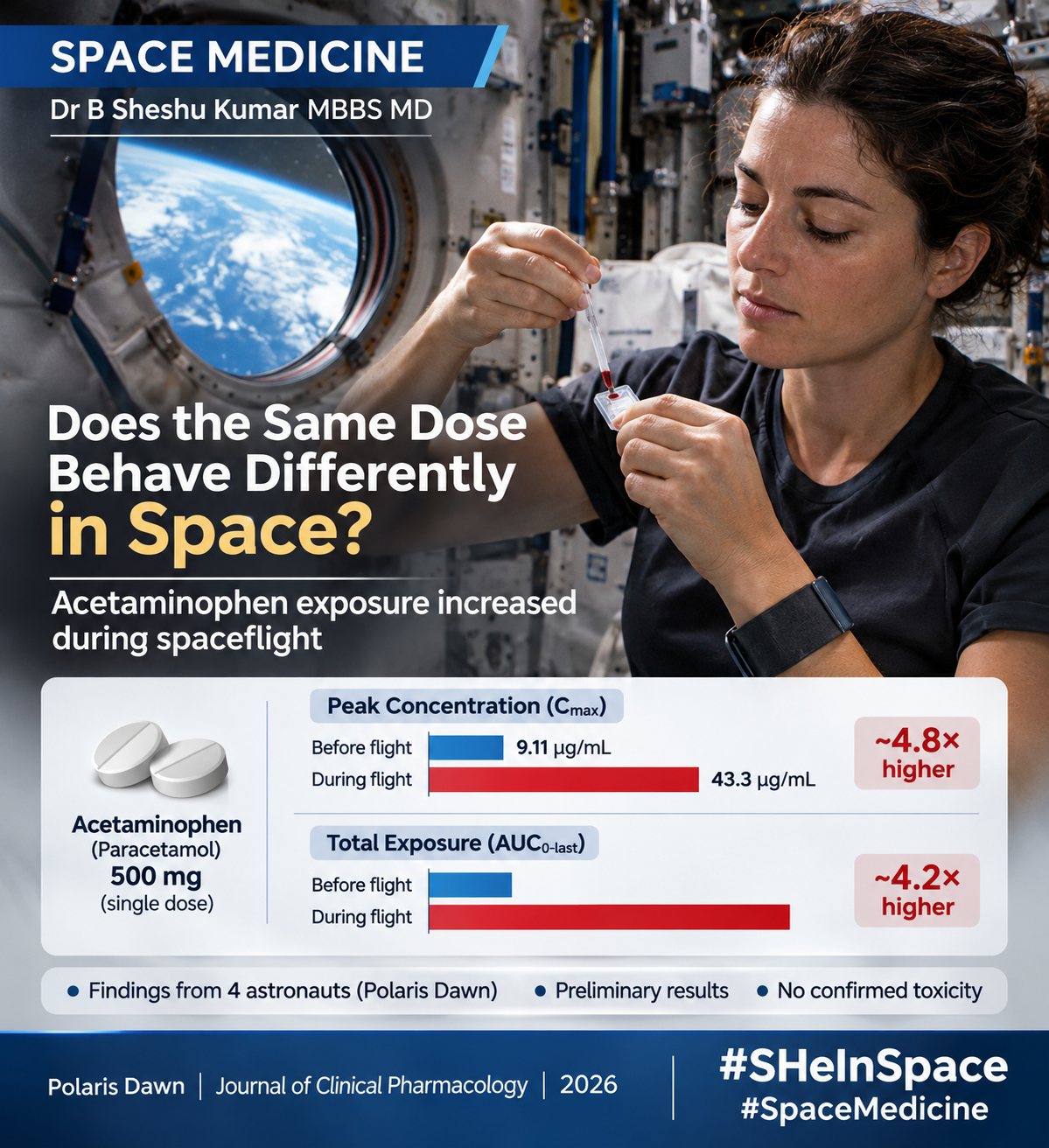
A 2026 study published in *The Journal of Clinical Pharmacology* investigated acetaminophen (paracetamol) pharmacokinetics in four astronauts during the Polaris Dawn mission.
Following a standard 500 mg oral dose, investigators observed substantially altered drug exposure during spaceflight compared with pre-flight measurements.
**Key Scientific Findings**
• **Peak drug concentration (Cmax):** Increased approximately 4.8-fold during spaceflight.
• **Systemic exposure (AUC):** Increased more than fourfold, suggesting significant pharmacokinetic alterations.
• **Apparent drug clearance (CL/F):** Decreased by approximately 76%.
• **Analytical innovation:** Volumetric absorptive microsampling enabled capillary blood collection in microgravity, followed by LC-MS/MS analysis on Earth.
**Clinical and Space Medicine Perspective**
Spaceflight-associated changes in fluid distribution, gastrointestinal physiology, and metabolism may influence drug absorption, distribution, and elimination.
Although the study involved only four astronauts and did not establish clinical toxicity, the findings raise important questions about the applicability of terrestrial dosing protocols during space missions.
**The broader implication:** Medication safety during long-duration spaceflight may require dedicated pharmacokinetic studies, individualized dosing strategies, and reliable onboard therapeutic monitoring.
**Reference:** Mampre D, et al. *Volumetric Absorptive Microsampling During Spaceflight for Analysis of Acetaminophen Pharmacokinetics in Whole Blood.* The Journal of Clinical Pharmacology. 2026.
https://doi.org/10.1002/jcph.70240
#SpaceMedicine #SHeInSpace #ClinicalPharmacology #Pharmacokinetics #AerospaceMedicine #ClinicalBiochemistry