
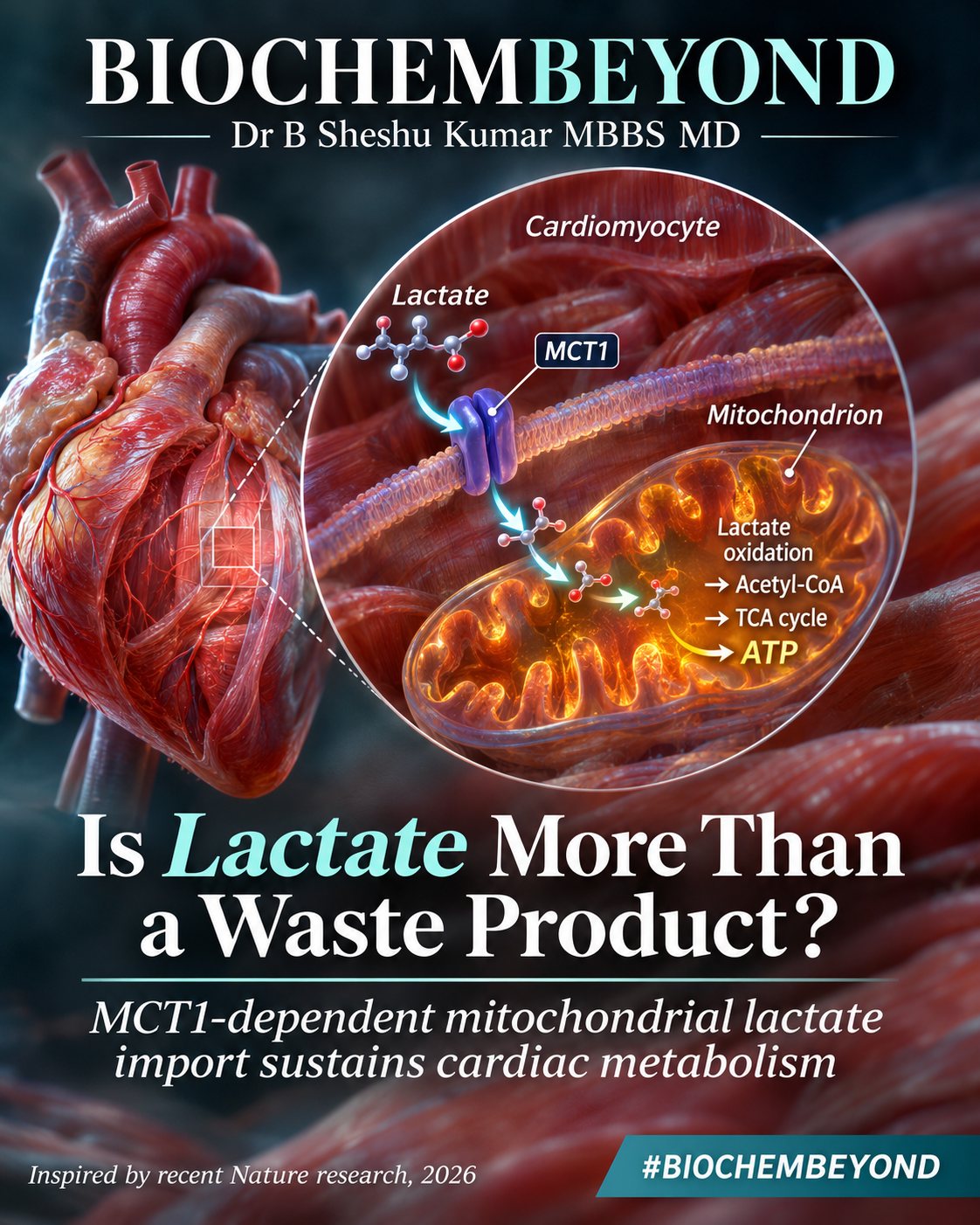
Lactate has traditionally been associated with anaerobic glycolysis, tissue hypoxia, and metabolic stress. However, increasing evidence highlights its physiological importance as an oxidative fuel and metabolic intermediary.
A recent study published in *Nature* (2026) provides further insight into **MCT1-dependent mitochondrial lactate transport and its contribution to cardiac energy metabolism**.
**Key Scientific Insights**
• **Mitochondrial metabolism:** Lactate can contribute to oxidative energy production in cardiomyocytes.
• **Metabolic flexibility:** Lactate utilization may support cardiac energy requirements under varying physiological conditions.
• **Transport mechanisms:** MCT1-dependent lactate transport highlights the importance of substrate availability and intracellular metabolic regulation.
• **Clinical relevance:** These findings reinforce the need to interpret circulating lactate in its physiological context rather than considering it solely a marker of tissue hypoxia.
**Clinical Perspective**
Elevated blood lactate remains clinically important, particularly in critical illness. However, lactate concentration reflects the balance between production, utilization, and clearance and does not independently establish tissue hypoxia.
Understanding lactate as both a metabolic substrate and a clinical biomarker may improve our interpretation of cardiovascular physiology and metabolic dysfunction.
**The broader implication:** Lactate is not merely an end product of glycolysis; it is an integral component of cellular energy metabolism.
**Reference:** *Nature* (2026). MCT1-dependent mitochondrial lactate import and cardiac metabolism.
https://doi.org/10.1038/s41586-026-11182-3
#ClinicalBiochemistry #CardiacMetabolism #Lactate #Mitochondria #MetabolicFlexibility #MolecularMedicine