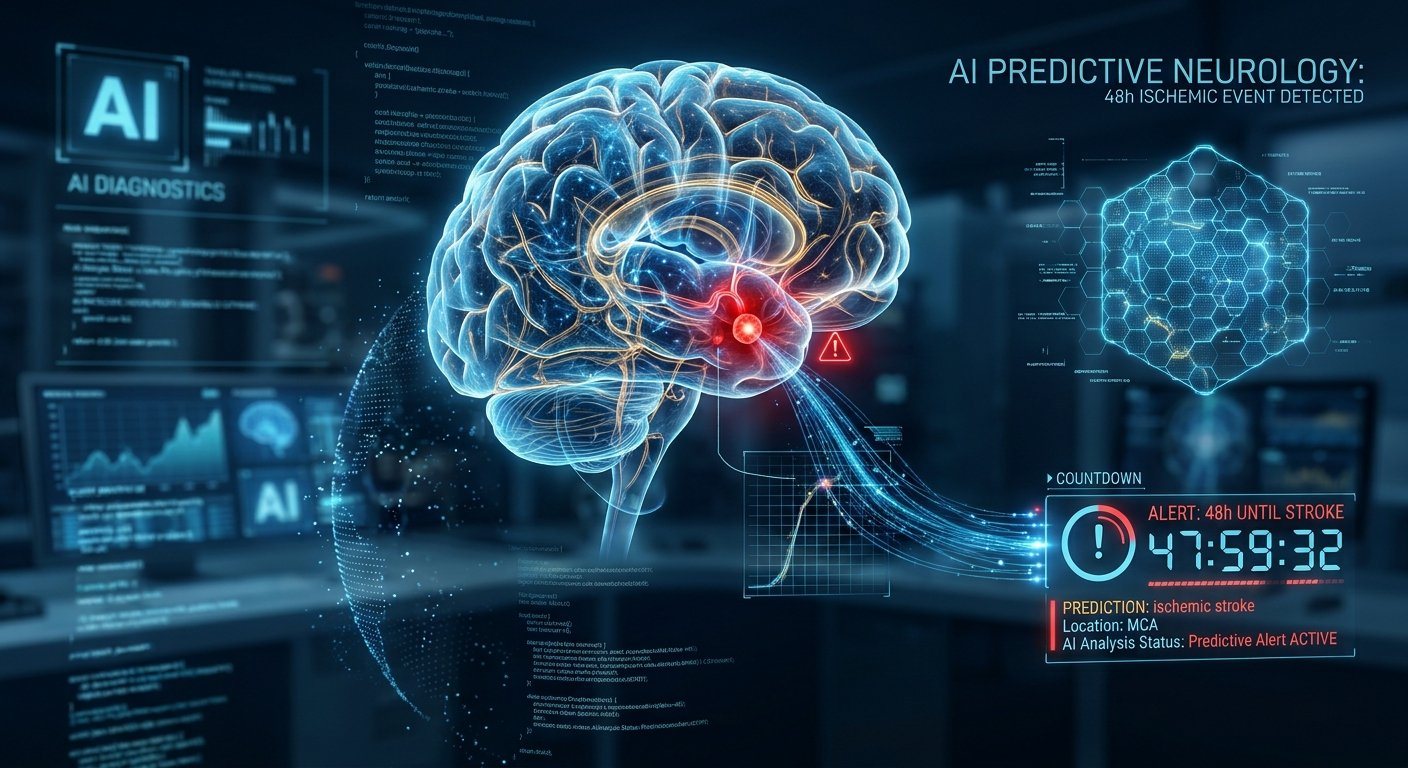
In a medical breakthrough poised to transform emergency medicine and cardiology, a collaborative team of cardiologists and AI engineers has developed a predictive algorithm capable of detecting silent warning signs of strokes and heart attacks a full 48 hours before onset, achieving clinical accuracy exceeding 92%.
The technology leverages a deep Long Short-Term Memory (LSTM) neural network combined with advanced time-series analysis algorithms. It continuously processes high-frequency biometric streams from medical-grade wearables and hospital monitors, including electrocardiograms (ECG), Heart Rate Variability (HRV), and microvascular blood flow via photoplethysmography (PPG). The system’s strength lies in identifying microscopic physiological anomalies invisible to human clinicians—such as subtle shifts in myocardial repolarization and micro-fluctuations in arterial stiffness that precede thrombus formation.
Trained and validated on an expansive dataset of over 1.5 million patient records, the model incorporates Explainable AI (XAI) frameworks to pinpoint the exact biomarkers triggering each alert. Consequently, rather than acting as a "black box," the system provides physicians with actionable physiological insights, identifying whether the impending risk stems from silent arrhythmias (such as occult atrial fibrillation) or acute hemodynamic instability. This innovation shifts clinical practice from reactive emergency care to proactive prevention, offering doctors a critical two-day window to administer anticoagulants or perform preventive interventions, drastically reducing stroke-related mortality and permanent disability.