": Discovering a Secret Chemical Language Through Which Trees Exchange Warning Signs About Insects
An advanced study in Chemical Ecology has uncovered intricate details of the sophisticated defense mechanisms trees and plants use to communicate and warn neighbors of impending insect attacks. Researchers demonstrated that forests are not passive collections of flora, but active biological communication networks utilizing a dual chemical language transmitted both through the air and beneath the soil.
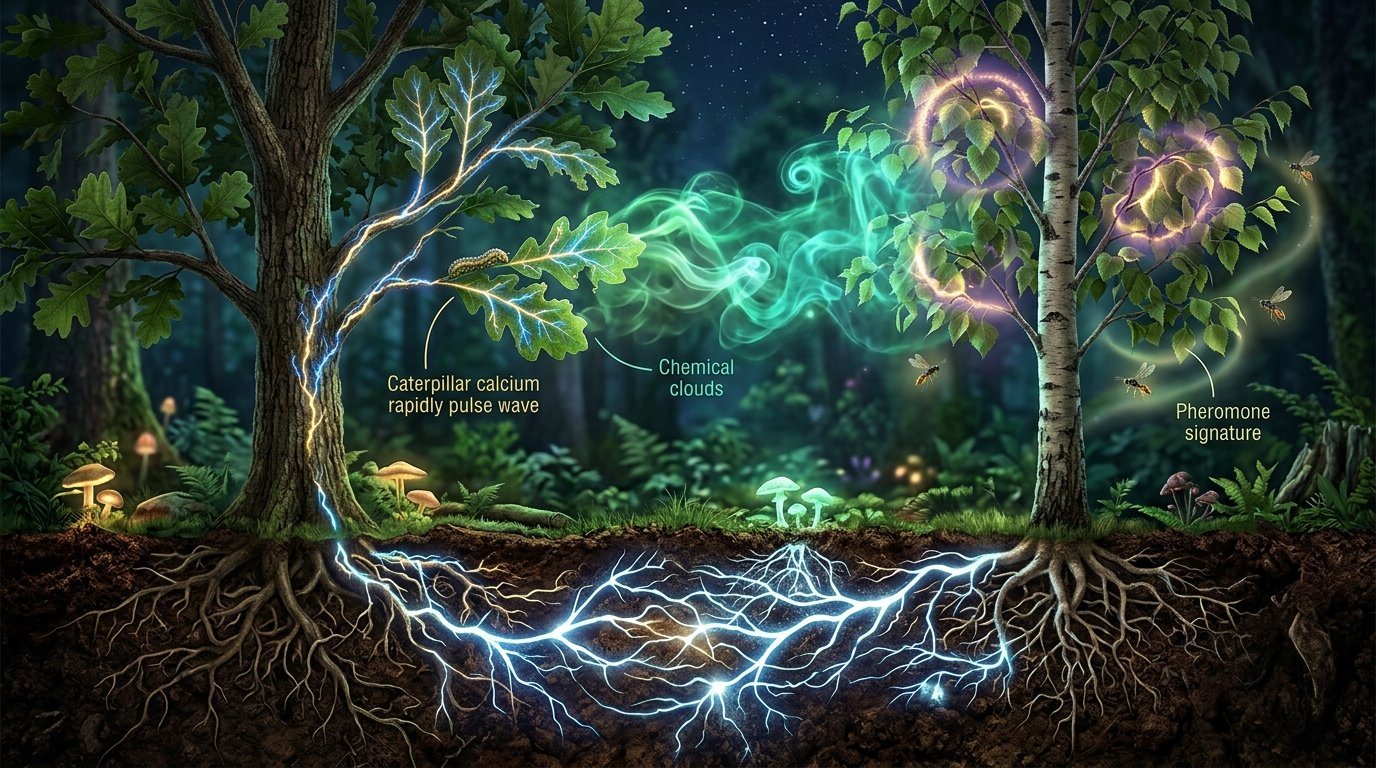
When an herbivorous insect begins chewing on a tree’s leaves, damaged plant cells immediately trigger a wave of electrical calcium ions throughout their vascular tissues, stimulating the synthesis and release of specific Volatile Organic Compounds (VOCs)—primarily terpenes and methyl salicylate—into the atmosphere. Utilizing Gas Chromatography-Mass Spectrometry (GC-MS) alongside ultra-sensitive fluorescence imaging, scientists captured the exact moment neighboring, unharmed trees absorbed these airborne chemical cues through their leaf stomata.
Upon intercepting the warning plume, neighboring trees rapidly upregulate defense-related genes and reprogram their metabolism within hours. They pump high concentrations of bitter, toxic tannins and phenolic compounds into their foliage to deter pests, while simultaneously emitting secondary volatiles that attract parasitic wasps to prey on the invading insects. Concurrently, complementary chemical and electrical signals travel underground via symbiotic Mycorrhizal Fungal Networks linking root systems. Understanding this botanical signaling unlocks revolutionary strategies for sustainable agriculture, allowing farmers to prime crop immunity naturally and drastically cut synthetic pesticide use.